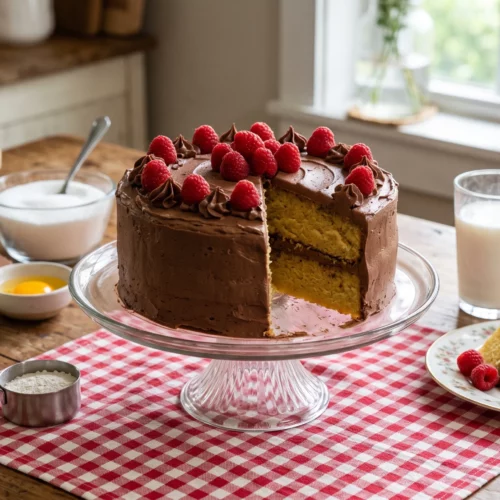
Basic Yellow Cake Recipe High-Altitude
Servings: 12 servings
Ingredients
- 2 cups sugar, LESS 2 Tbsp Caster sugar gives the best texture,but any granulated sugar works
- 2 1/2 cups unbleached all-purpose flour, PLUS 2.5 Tbsp
- 1 1/2 tsp baking powder
- 1 tsp salt
- 12 Tbsp unsalted butter softened
- 1 1/2 cups milk, PLUS 3.5 Tbsp room temperature
- 2 tsp vanilla extract
- 3 lg eggs + 1 egg yolk
Instructions
- Preheat the oven to 375°F.
- Lightly grease and flour the cake pans. Options include a 9″ x 13″ pan, two 9″ round pans, three 8″ round pans, or muffin tins for cupcakes. If you use muffin tins, line the cups with papers and add a quick spray, making cleanup easier.
- In a big mixing bowl, whisk together the sugar, flour, baking powder, and salt. It’s important to mix these dry ingredients well so the cake rises evenly and tastes balanced. You don’t want salty or bland bites; a quick whisk solves that.
- Add the softened butter and mix on low speed with an electric mixer. The mixture looks sandy and a bit clumpy at this point, but that is normal. This step coats the flour with fat, which keeps the cake soft and helps prevent dryness.
- Measure the milk and stir in the vanilla, letting it come to room temperature, which helps the batter mix together smoothly. Pour the milk and vanilla into the bowl all at once. Mix on low for about 30 seconds, then on medium for another 30 seconds, blending well. Scraping the bowl is really important here to catch any stuck dry bits.
- With the mixer on low, add the first egg, then mix on medium for 30 seconds. Repeat this process for each egg, stopping to scrape the bowl so each egg blends fully before adding the next one. This stops lumps from forming and makes the cake really light.
- After the last egg, give the bowl a good scrape, followed by a final 30-second mix on medium high. The batter looks thick, smooth, and a little glossy at this stage. Pour the batter into the prepared pans, trying to smooth the tops out gently with the back of a spoon or an offset spatula.
- Baking times change depending on the pan size. For a 9″ x 13″ cake, bake about 32 minutes. For 9″ layers, about 22 minutes. For 8″ layers, 20 minutes, and for cupcakes, 18 to 20 minutes. Start checking a few minutes before the end time. You will see the edges turning golden brown as they begin to pull away from the pan. A toothpick poked in the center comes out clean when it’s ready.
- Once baked, the cake needs to cool in the pan on a rack for about 10 minutes. Then gently loosen the edges before removing the cake from the pan, so it releases cleanly. Cool completely on a wire rack before frosting.
Notes
If my kitchen is cold, I warm the eggs and milk to room temperature ahead of starting. Cold ingredients can stop the cake from mixing smoothly.
You can soften butter by warming in the microwave in 15-second bursts, pressing the top after each burst. It should feel lukewarm, but still be a defined stick, not melted.
Measuring ingredients by weight leads to the most reliable, even cakes. When I use measuring cups, small changes can affect texture.
Beating the eggs in one-by-one creates a soft, airy batter. Skipping this step or adding too fast can make the cake dense.
I avoid opening the oven door too often. Sudden changes in heat can lead to uneven baking or sunken centers.
Adding a splash of almond extract to the batter is a simple way to switch up the flavor profile if you want something beyond classic vanilla. Just substitute 1/2 teaspoon almond extract for half of the vanilla.
You can soften butter by warming in the microwave in 15-second bursts, pressing the top after each burst. It should feel lukewarm, but still be a defined stick, not melted.
Measuring ingredients by weight leads to the most reliable, even cakes. When I use measuring cups, small changes can affect texture.
Beating the eggs in one-by-one creates a soft, airy batter. Skipping this step or adding too fast can make the cake dense.
I avoid opening the oven door too often. Sudden changes in heat can lead to uneven baking or sunken centers.
Adding a splash of almond extract to the batter is a simple way to switch up the flavor profile if you want something beyond classic vanilla. Just substitute 1/2 teaspoon almond extract for half of the vanilla.